Petroleum, polymer, surfactant, and pharmaceutical industry analysts work with
compounds that GC or LC cannot easily separate or detect because of thermal
instability, lack of chromophores, and other causes of ineffective separations.
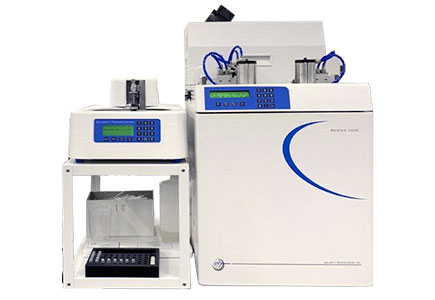
The Series 4000 has been designed for use with both nonvolatile and volatile
analytes, including thermally labile analytes. It is the new generation of
SFC that is rugged, reliable, reproducible and easy to use.
Petroleum Industry
Refineries producing gasoline, diesel, and jet fuels will benefit by using
SFC. The ASTM organization has developed and accepted two class fractionation
methods using SFC. ASTM D5186 measures the total aromatic and PNA content
in diesel and jet fuel, and ASTM D6550 measures the total olefin content
in gasoline. These methods are the alternatives to the FIA method ASTM D1319.
Some regulatory agencies are requiring the use of ASTM D5186 and D6550 for
tighter specs.
Polymer Industry
The Series 4000 provides an easy way to analyze low molecular weight polymers
(up to about 5,000 molecular weight), monomers, oligomers, and polymer precursors.
Many polymers do not have chromophores sensitive to UV detection; hence the
FID on the Selerity Technologies Series 4000 is the most effective detector
for these materials.
Surfactants
Nonionic surfactants, found in paints, household chemicals, soaps, beauty care
products, and in thousands of other industrial products, are extremely difficult
to analyze by GC or LC. Such surfactants are readily analyzed with the Series 4000 using carbon dioxide and the sensitive Series 4000 FID.
Pharmaceutical
The ability to process thermally sensitive compounds coupled with convenience
and ease of use make the Series 4000 the first choice for many pharmaceutical
applications.
Chemical Industry
Analysts dealing with highly reactive compounds such as isocyanates, achieve
reliable and easy analysis by SFC. The operating temperature of SFC means
that the analysis of such thermally labile compounds is no problem.
Food Industry
Derivitization is a must when analyzing fatty acids and triglycerides with
either GC or LC. The added solvent strength of supercritical carbon dioxide
along with the use of an FID makes these analysis quick and easy. The SFC
system is fully automated and no derivitization is needed.
Click
Here to Request Information